
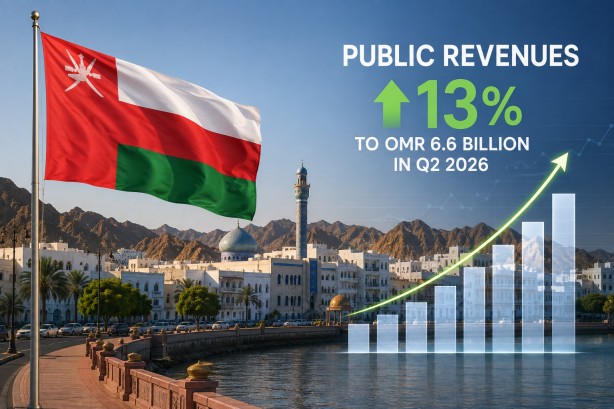
Oman’s public revenues have seen a significant 13% rise year-on-year, reaching approximately OMR 6.602 billion by the end of the second quarter of 2026. This growth is primarily attributed to increased oil and gas revenues, as outlined in the Ministry of Finance’s Fiscal Performance Bulletin. Public revenue figures mark an increase from OMR 5.839 billion during the same period in 2025, with net oil revenues climbing 10% to OMR 3.332 billion and net gas revenues surging 32% to OMR 1.164 billion.
During this period, the average oil price realized by Oman was $74 per barrel, and daily production averaged around 1.074 million barrels. This boost in energy revenue significantly contributed to the overall enhancement of the nation’s public finances, reflecting the strategic importance of the energy sector in Oman’s economic framework.
In tandem with revenue growth, Oman’s public expenditure also rose, amounting to OMR 6.619 billion, representing a 9% increase from OMR 6.098 billion in the previous year. Current expenditure reached OMR 4.369 billion, while ministries and civil units allocated OMR 798 million towards development spending. This increase in spending indicates an active governmental approach to stimulate economic growth and development through strategic investments.
Despite the uptick in expenditure, Oman maintained a relatively stable public debt level, recorded at OMR 14.16 billion, a slight rise from OMR 14.12 billion during the same period last year. This stability suggests sound fiscal management amidst growing financial commitments and serves as a positive indicator for the country’s economic health.
Overall, the figures from the first half of 2026 highlight a period of continued financial growth for Oman, driven by robust energy revenues. The increased government expenditure reflects ongoing efforts to support national development, while maintaining fiscal stability, reinforcing the country’s economic resilience in a dynamic global market.