
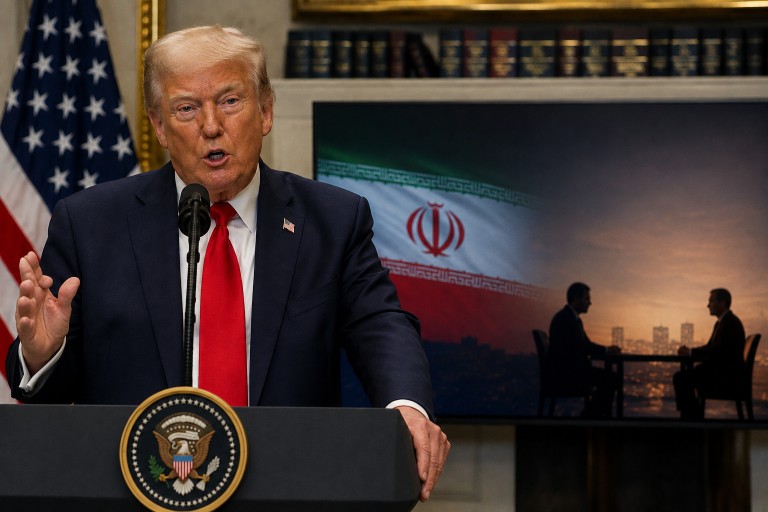
President Donald Trump announced that a planned military strike on Iran was called off, citing progress towards a framework agreement that could reopen the Strait of Hormuz and address nuclear program concerns. The decision followed assurances from Iran and other Middle Eastern nations, with support from Israel, according to Trump.
However, Iranian officials refuted Trump’s assertion, denying any request to halt the attack and labeling the claim as false. They emphasized that their armed forces remain on high alert. Iran warned that any military action from the United States or Israel could provoke a strong retaliatory response, potentially targeting regional energy infrastructure.
The situation has heightened tensions in global energy markets, as disruptions in shipping through the Strait of Hormuz contribute to ongoing anxiety over oil supplies and regional security. This strategic waterway is crucial for the transit of a significant portion of the world’s oil, and its closure could have far-reaching economic impacts.
These developments come amidst a backdrop of escalating tensions between the U.S. and Iran, which have kept international observers on edge. While diplomatic efforts appear to be making some headway, the risk of conflict remains a significant concern for all parties involved, with potential consequences for the stability of the Middle East.