
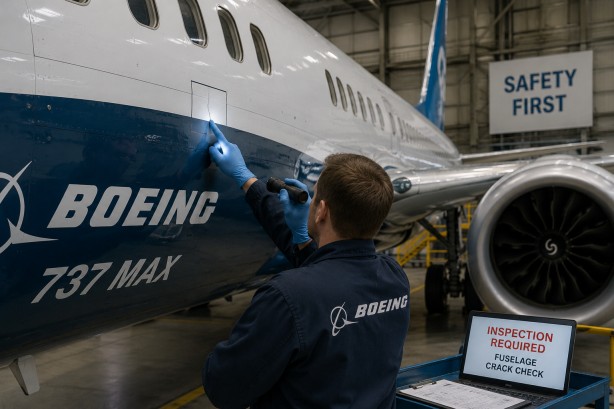
The Federal Aviation Administration has mandated inspections of Boeing 737 Max aircraft, focusing on potential cracks in a structural component of the fuselage. This directive will impact an estimated 471 planes, with inspections set to commence in September. The inspections target a part known as the bear strap, which comprises structural sheets that support the fuselage surrounding the exit doors. This concern arises after similar cracks were found in the older Boeing 737 Next Generation models, leading to inspections of those aircraft as well.
While no issues have been reported in the 737 Max fleet yet, the FAA highlighted that the aircraft shares a comparable design and manufacturing process with the Next Generation models. This similarity raises the possibility of the same issue occurring in the 737 Max planes. Regulators have cautioned that if these cracks go undetected, they could compromise a major structural component, potentially affecting the aircraft’s overall structural integrity.
Boeing has acknowledged the situation, stating that it has been collaborating with airlines on this issue since its identification in 2019. The company supports the required inspections, emphasizing that these checks aim to detect and address any problems before they escalate to a critical level. The inspections represent the latest in a series of scrutiny efforts surrounding the 737 Max, following past safety incidents and ongoing concerns about manufacturing and engineering quality.
The Boeing 737 Max aircraft was previously grounded globally after two tragic accidents in 2018 and 2019. These incidents have led to heightened attention and regulatory measures to ensure the safety and reliability of the fleet. The ongoing inspections of the bear strap component reflect continued vigilance as aviation authorities and Boeing work to maintain the highest safety standards in the industry.