
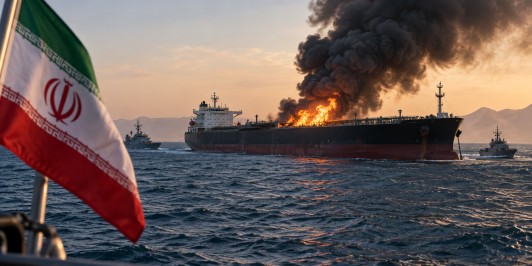
An oil tanker named EL GAIA caught fire in the Strait of Hormuz after reportedly striking naval mines, according to Iran’s Islamic Revolutionary Guard Corps (IRGC). The incident occurred as the tanker attempted to traverse a route that Iranian authorities had designated as off-limits. Despite efforts by Iranian authorities, the flames could not be brought under control.
The IRGC Navy identified the vessel and stated that it was navigating a restricted path south of the crucial maritime passage when the disaster unfolded. Iranian officials had previously issued warnings about the hazards associated with using this prohibited route. In a statement, the IRGC reiterated that the Strait of Hormuz remains closed and is under the supervision of Iranian naval forces.
The Persian Gulf Strait Authority in Iran has also issued advisories to insurance companies, protection and indemnity insurers, and classification societies, cautioning them against offering services to ships that infringe upon the imposed maritime restrictions. This incident further underscores the heightened tension and potential risks for vessels operating in this strategic region.
The Strait of Hormuz is a vital conduit for global energy supplies, channeling a substantial portion of the world’s oil and gas exports. Restrictions on navigation through this waterway have sparked concerns regarding further disruptions to the international energy market, which could have significant economic repercussions.
The control measures over the Strait of Hormuz were intensified by Iran following joint US-Israeli military actions against Iran on February 28. Concurrently, US forces have established a naval blockade targeting ships bound to and from Iranian ports, further complicating the geopolitical situation in this critical area.