
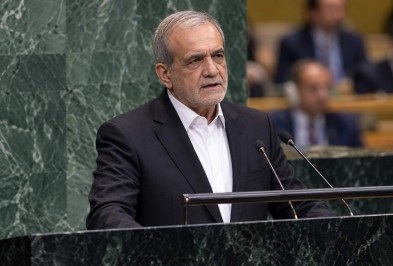
Iranian President Masoud Pezeshkian addressed the United Nations General Assembly, criticizing U.S. President Donald Trump while affirming Iran’s openness to dialogue and negotiations. Pezeshkian emphasized that Tehran is ready for diplomacy, provided talks are not conducted under threats or military pressure.
His comments came shortly after President Trump suggested that the United States might pursue additional measures against Iran, although he indicated a willingness to engage in renewed discussions. On the sidelines of the UN General Assembly, Iranian Foreign Minister Abbas Araghchi and U.S. special envoy Steve Witkoff held a three-hour meeting mediated by Qatar. The discussions centered on Iran’s conditions for ending the conflict and reducing pressure on the country.
Pezeshkian reiterated Iran’s right to a peaceful nuclear program, asserting that the nation does not seek nuclear weapons. He called for regional cooperation on security issues, advocating for collaboration over reliance on external powers. A focal point in these talks is the Strait of Hormuz, a critical maritime passageway that has experienced disruptions affecting global shipping and energy markets. Iran has indicated that it could reopen the strait if its demands, including the cessation of military pressure and lifting economic sanctions, are fulfilled.
Tehran’s conditions further include ending hostilities, lifting the naval blockade, and unfreezing Iranian assets. Pezeshkian accused the United States and Israel of aggression, claiming Iran’s actions are in self-defense. The nation faces ongoing economic challenges and oil export difficulties due to persistent sanctions and shipping restrictions.
Despite significant disagreements over sanctions, the conflict, and Iran’s nuclear ambitions, the latest diplomatic engagement suggests that dialogue remains a possibility between Washington and Tehran.