
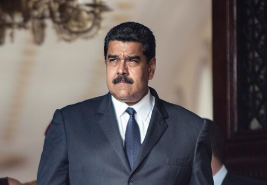
Security experts analyzing the United States military operation in Venezuela emphasize that any successful regime transition would require sustained American engagement and cannot rely on isolated military strikes. The Saturday operation that captured President Nicolás Maduro represents just the beginning of what could be a lengthy and complex process.
Dr. Christopher Sabatini from Chatham House noted that even if regime change occurs, achieving democratic transformation would require ongoing US involvement and resources. He questioned whether the Trump administration has the stomach for sustained engagement, particularly given domestic opposition to military operations in Venezuela and potential Congressional oversight under the War Powers Act.
The challenge of creating lasting change is compounded by Venezuela’s political system, which has proven resilient through previous leadership transitions. Dr. Carlos Solar from RUSI pointed out that when Hugo Chávez died, the Chavista movement continued under Maduro for another decade and a half, suggesting that removing one leader may not transform the underlying system.
US Attorney General Pam Bondi has announced that Maduro and his wife Cilia Flores will face drug trafficking charges in New York, with Secretary of State Marco Rubio confirming the charges relate to narcotics operations. President Trump stated the couple is aboard a ship being transported to the United States for prosecution.
The international community has responded with widespread condemnation, with UN Secretary General António Guterres warning of dangerous precedents. Major powers including China, Russia, and European nations have criticized the operation, while Latin American responses have split along ideological lines. Colombia has mobilized its armed forces in anticipation of refugee flows, highlighting the immediate practical challenges created by the intervention.